
 Julien Paltrinieri
Which tool is the better fit?
Choose Emailx when you want per-contact, voice-calibrated writing and LinkedIn automation without building a data pipeline. Clay has added its own Sequencer for cold email since this page was first written, so it is no longer strictly true that Clay always requires a separate sending tool, but it still has no native LinkedIn sending, and its Sequencer is enrichment-workflow output, not voice-calibrated per-contact writing the way Emailx's is.
Choose Clay when your team runs complex multi-source enrichment with waterfall fallback logic, needs records routed into Salesforce or HubSpot before outreach, or requires Claygent's open-ended web research per contact.
Feature comparison of Emailx and Clay
The practical differences, before the deeper explanation.
| Outreach tool | Rating | Best for | Starting price |
|---|---|---|---|
| Emailx | ⭐⭐⭐⭐⭐ | Teams that want research-led outreach without building or maintaining a data stack | 7-day trial (card required), from $29/month |
| Clay | ⭐⭐⭐⭐⭐ | Growth teams and agencies that need custom enrichment logic, waterfall fallbacks, and CRM integration before outreach | From $185/month; a native email Sequencer is included |
How Emailx and Clay approach outbound
A closer look at what each product is designed to help a team do.
Emailx
Overview
 emailx.ai
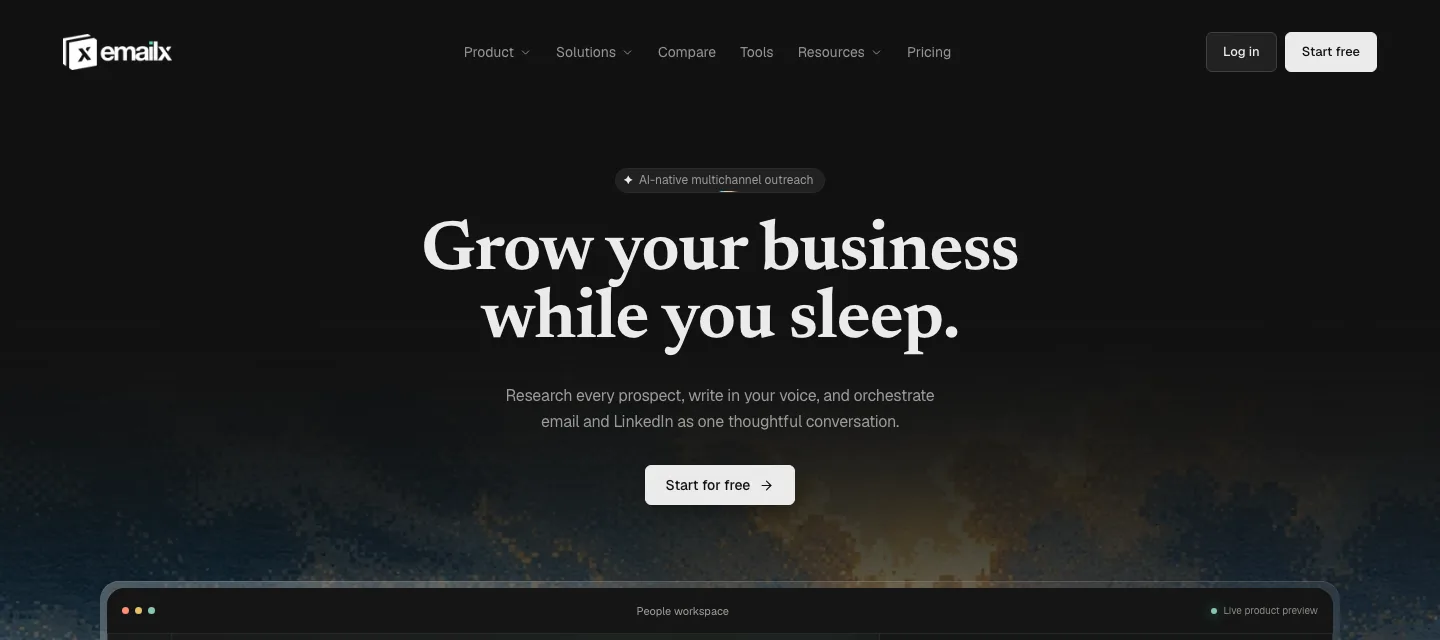
Emailx is built for teams that want research, writing, and outreach to happen in one place. It researches each prospect from live web and LinkedIn signals at the moment it writes the message, rather than building an enriched list in advance.
The workflow covers email and LinkedIn in the same campaign. Research stays visible for review before anything sends, and outreach stops when a prospect replies.
Compared with Clay, Emailx trades enrichment flexibility for stack simplicity. It is best for teams that want personalized outreach running quickly without learning a data pipeline or managing handoffs between multiple tools.
Best features
- Live research at the moment of writing
- Voice-aware email drafting
- Server-side LinkedIn automation
- Reviewable campaign preparation
- One subscription for research, sending, and LinkedIn
Pricing
- 7-day trial, card required (up to 250 emails included)
- Plans scale with sending volume, not seats: email from $29/month annual, email + LinkedIn from $83/month annual
- Enterprise: custom, book a consultation
Clay
Overview
 Clay
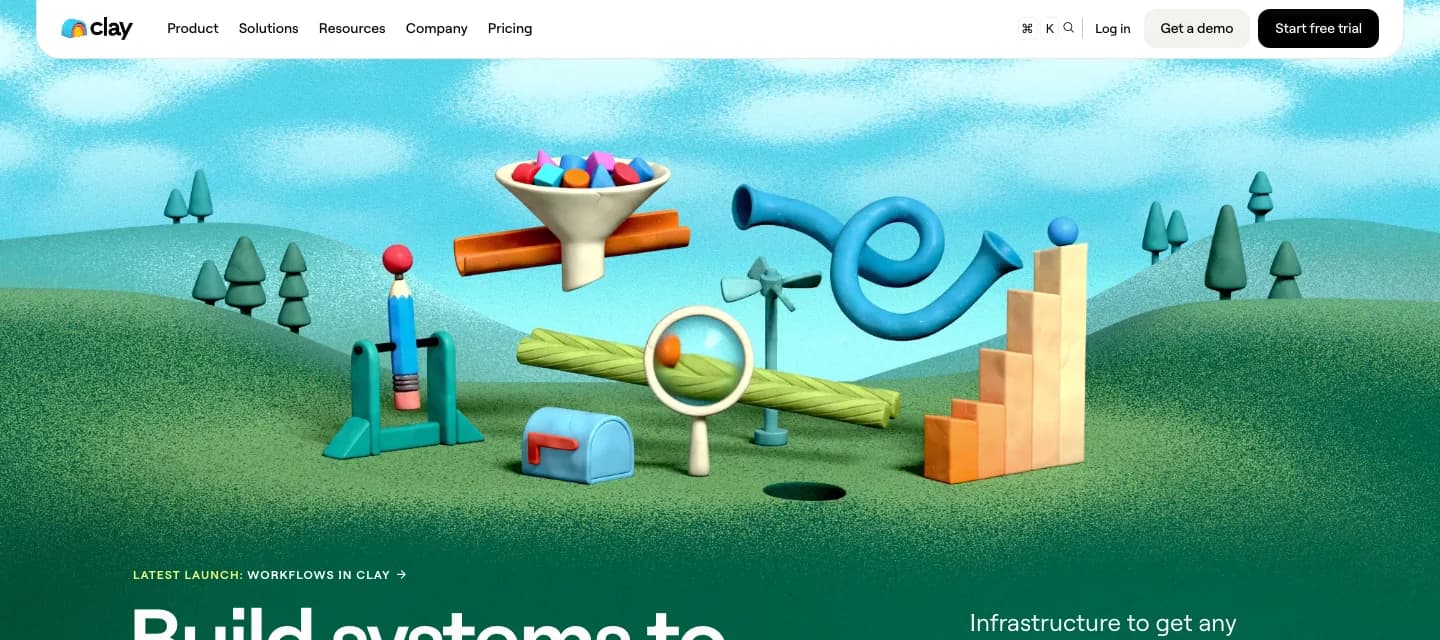
ClayClay is a data enrichment and workflow tool that sits upstream of outreach: it pulls from over 150 data providers, lets you define waterfall logic for data quality at scale, and connects enriched records to any sending tool or its own native Sequencer. Claygent, its AI research agent, can do open-ended web research per record.
The breadth of what Clay can enrich and the flexibility of how it routes data through a custom workflow are unmatched in the category. Teams that need precise control over which data source runs in which order, with fallback logic when a provider misses, find Clay irreplaceable.
Compared with Emailx, Clay is the more powerful choice for sophisticated outbound operations. Clay has since added its own Sequencer, so cold email can now run inside Clay rather than requiring a separate sending tool; it still has no native LinkedIn sending, and the Sequencer's depth against a dedicated deliverability-focused sender has not been fully verified here. The learning curve remains real either way.
Best features
- 150+ enrichment providers with waterfall fallback logic
- Claygent AI web research per record
- Custom no-code workflow and branch logic
- Deep CRM integrations (Salesforce, HubSpot, Airtable)
- Native Sequencer for cold email, or export to any sending tool
Pricing
- Free: 100 Data Credits, 500 Actions/month, includes the Sequencer
- Launch: starts at $185/month, 2,500 Data Credits, 15,000 Actions/month
- Growth: starts at $495/month, adds CRM auto-sync and priority support
- Enterprise: custom, checked directly on Clay's live pricing page, 2026-09-07
Which workflow fits your team?
Start with the work that is difficult today, not the longest feature list.
Choose Emailx if…
You want research, email, and LinkedIn outreach in one tool without building and maintaining a data stack.
Your prospect list is already built: you have contacts in a CRM or CSV and want to get to personalized outreach quickly.
You need LinkedIn automation alongside email, which Clay's own Sequencer does not cover, so a multichannel Clay stack still means assembling a separate LinkedIn tool.
Choose Clay if…
Your team runs complex enrichment across multiple providers with waterfall logic and fallback rules for data quality.
Enriched records need to flow into Salesforce or HubSpot before outreach, and the CRM integration is non-negotiable.
Claygent's open-ended research per record is necessary for the level of context your team needs before a message is written.
Where Emailx and Clay meaningfully differ
The decision becomes clearer when you follow the work from research to reply.
List-build time, or write time
Research before outreach is not a single thing. When enrichment runs determines what the message can reference and how current that signal is when the email arrives. A contact's job title does not change often; the reason to reach out today often changes by the week.
Emailx researches each prospect at the moment it drafts the message: recent LinkedIn signals, company news, and role context. The signal is current because it runs just before the draft is created, and the evidence stays visible for review alongside the wording. Clay enriches records when the list is built, pulling from over 150 structured data sources with waterfall logic to maximize coverage. The research is comprehensive at import time but static by the time a message sends. If multi-source depth and waterfall fallback logic across providers are necessary for data quality, Clay's approach is the more powerful one. If a campaign runs weeks after enrichment and timeliness matters, Emailx's signal is newer.
One subscription, or a configured stack
The cost and complexity of an outreach program is not only the subscription cost of the tool at the center. Tools that require additional sending infrastructure, a separate LinkedIn layer, and CRM sync create a stack where every component adds cost, upkeep, and a handoff to manage.
Emailx is one subscription: research, email infrastructure, LinkedIn, and sending are bundled together. There is no handoff between a data tool and a sending tool. The trade-off is that enrichment logic is fixed rather than configurable. Clay is powerful because it is configurable: every enrichment step, fallback rule, and routing decision is defined by the team, and Clay's own Sequencer can now send the resulting cold email directly, so a separate sending tool is optional rather than required the way it used to be. Clay still has no native LinkedIn sending, and a typical multichannel Clay workflow adds a LinkedIn tool on top. Reviewers on G2 and Reddit consistently describe the configuration overhead as significant before the first campaign is running. For teams whose outreach motion requires exactly that level of control, the stack is worth building. For teams that want to start quickly without assembling a pipeline, it is not.
Email only, or both channels
LinkedIn is a distinct channel with its own automation constraints. For any team considering a multichannel motion, the relevant question is whether the tool at the center includes LinkedIn natively or whether a third tool enters the stack to handle it.
Emailx runs LinkedIn sequences server-side alongside email: connection requests, follow-up messages, and a stop when the prospect replies on either channel, with no browser extension required. Clay can research LinkedIn profiles via Claygent, and its own Sequencer now runs cold email, but it still does not send LinkedIn messages or run LinkedIn sequences. Adding LinkedIn outreach to a Clay workflow requires a separate tool for that channel specifically. For teams whose outbound includes LinkedIn, this adds subscription cost and another handoff. Teams that do not use LinkedIn outreach will not encounter the distinction, since Clay's Sequencer now covers email natively.
Per-tool pricing, or total stack cost
A tool's starting price is not the cost of using it. When a workflow requires multiple tools to run, the total cost is the sum of every subscription, and the tools that enter later in the stack often determine more of that total than the tool at the center.
Emailx covers research, email infrastructure, LinkedIn, and sending in one subscription. There are no additional tools required to run a full multichannel campaign. Clay's Free plan now includes its Sequencer for cold email at no cost, and Launch starts at $185 per month with more enrichment volume and rows per table; a team that only needs email can now run entirely inside Clay. Add a LinkedIn automation tool on top, and a full Clay-based multichannel workflow still commonly reaches $300 or more per month before data credits. For small teams or founders wanting email and LinkedIn together, Emailx remains the lower total cost; for email-only outreach with heavy enrichment needs, the gap has narrowed since Clay added native sending.
Days to first send, or weeks to master
Time to first campaign matters when a team is deciding whether to start a new outreach program or extend an existing one. The learning investment a tool requires before it delivers value is a real cost, and it compounds when early campaigns miss expectations while the team is still figuring out the configuration.
Emailx is designed to get a team from contact list to reviewed campaign drafts in a day: import a list, describe the offer and persona, and the first drafts are ready to review. Clay's table model, enrichment provider cascades, waterfall logic, and Claygent prompt design take days to weeks to learn. Reviewers on G2 regularly describe the learning curve as steep enough that early campaigns underperform before the workflow is properly configured. The investment pays off when a team needs the depth Clay provides and has time to build the pipeline. For a founder or small team that wants to start sending quickly, Emailx is the faster path to a first campaign.
Where each product is not the automatic answer
A good comparison should make the reasons not to switch just as visible.
Where Emailx is not the automatic answer
- If your team needs multi-source enrichment with waterfall logic across 150+ providers, Emailx's research layer is not a substitute for Clay's depth.
- If enriched records must flow into Salesforce or HubSpot with defined field mapping before reaching outreach, Clay's CRM integration is necessary.
- Clay-based workflows can serve multiple sending tools and team structures simultaneously. Emailx is a single-workspace tool and cannot replicate this flexibility.
Where Clay can be the better fit
- Your team runs custom multi-source enrichment with waterfall fallbacks and your own defined data quality rules.
- The CRM data mapping and sync workflows are non-negotiable before outreach begins.
- You are an experienced outbound operator who has already validated the motions and wants the control layer that Clay provides at scale.
Which tool should you choose?
Emailx is the better fit for teams that want research, personalization, email, and LinkedIn in one tool without building a data pipeline. Clay is the right choice for sophisticated outbound operations that need multi-source enrichment at scale, waterfall logic, and CRM integration before messages are written. Clay plus a great sender is still the highest-control approach for teams that have earned the complexity.
Sources
Verified September 7, 2026. Competitor capabilities and prices change, so each source below records the date it was checked.
- Clay pricingChecked September 7, 2026
- Clay Sequencer product pageChecked September 7, 2026
- Clay product overviewChecked September 7, 2026
- Clay reviews on G2Checked August 18, 2026
- Reddit r/coldemail, Clay discussion threadsChecked August 18, 2026